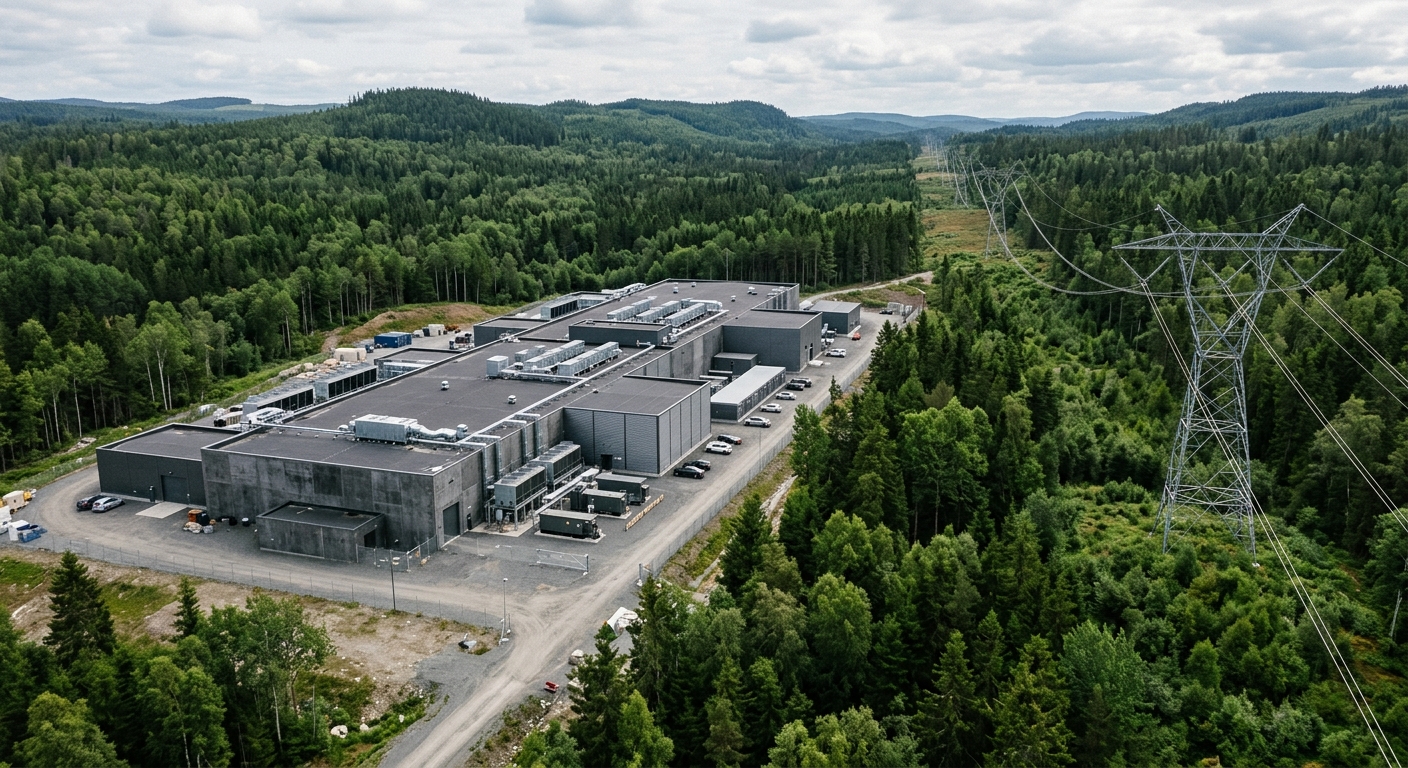
AI-generated illustration; not a photograph of the reported event.
- calendar_today November 17, 2026
Harvard Study Highlights Virginia's Data Center Impact
A new study by Harvard University's T.H. Chan School of Public Health has identified Virginia as the leading state for both electricity consumption and carbon dioxide emissions from hyperscale data centers in the United States. The study, published on November 16, 2026, offers the first facility-level estimate of these factors in the era of rapidly expanding artificial intelligence (AI).
Key Findings: Electricity Use and Emissions
The Harvard study reveals that America's largest data centers emit more carbon dioxide annually than the entire nation of Denmark. Much of this impact originates from Virginia, recognized as the world's data center capital. According to the report, out of 403 hyperscale data centers in the country, Virginia is home to 142 — the most of any state by a considerable margin. The next highest, Oregon, has only 56.
Virginia's Share of Hyperscale Electricity Consumption
Researchers found that Virginia's hyperscale data centers collectively use about 21 terawatt-hours (TWh) of electricity per year. This represents roughly one-fourth of all hyperscale data center electricity use nationwide, based on Harvard's central scenario. The high concentration of these energy-intensive facilities puts Virginia well ahead of other states in terms of electricity demand from the data center industry.
Carbon Emissions: An Escalating Environmental Concern
Alongside high electricity use, Virginia's data centers are the leading source of carbon dioxide emissions among their peers in the U.S. The study reports that, in its central scenario, Virginia's hyperscale data centers emit 11.5 metric tonnes (Mt) of CO2 annually. This figure is more than double that of Oregon, which produces 4.9 Mt each year.
Lead author Gianluca Guidi noted, "The data center boom hasn't slowed down since our study period ended in April 2025. New facilities have been built, existing campuses have expanded and demand for AI computing continues to grow. That means the electricity use and carbon footprint we're reporting could already be substantially larger now in 2026."
Strain on Virginia's Power Grid
Concerns regarding the extreme electricity needs of Virginia's data centers are longstanding. In December 2024, the Joint Legislative Audit and Review Commission (JLARC) warned that the state’s booming data center sector would put unprecedented strain on Virginia’s power grid. JLARC also indicated that rising energy demand from these centers could drive up electricity costs for consumers — an effect that is already being observed.
Environmental and Community Impacts
The Harvard study emphasizes that fossil fuel power plants supplying energy to data centers not only emit carbon dioxide, contributing to climate change, but also release other pollutants like fine particulate matter, nitrogen oxides, and sulfur dioxide. These substances are linked to heart and lung diseases and pose risks to communities living near and downwind of the power plants.
Citing these environmental impacts, organizations concerned about water, air, and noise pollution have called for a moratorium, or pause, on new data center developments in Virginia. As of now, more than 140 hyperscale data centers exist in the state, with many additional projects under construction or in early planning stages in regions such as Central Virginia.
Looking Ahead
With the continued rise of AI and the data economy, Virginia’s data center sector shows no signs of slowing. The study underscores the importance of monitoring and managing the associated energy consumption, carbon emissions, and environmental impacts as more facilities are developed in the state.
Related coverage
Source: wric.com.