- calendar_today August 9, 2025
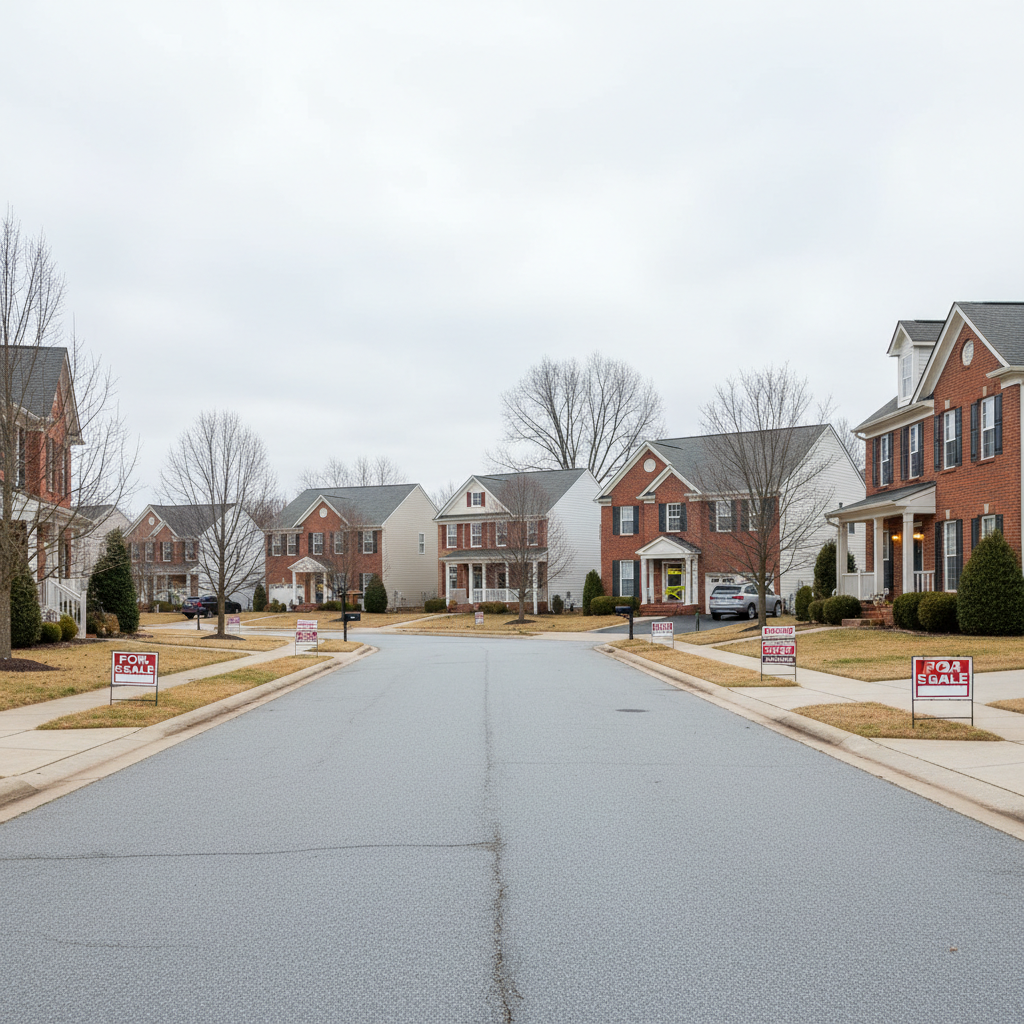
Virginia, once a reliable performer in the southeastern U.S. housing market, has entered 2025 facing pronounced headwinds. What began as a mild cooling in late 2023 has evolved into a broader housing freeze, as buyers retreat and sellers hold back amid economic volatility. From the high-priced suburbs of Northern Virginia to mid-sized cities like Charlottesville and Roanoke, the signs of a slowdown are visible across the state.
Home sales are declining, inventory is stagnant, and many prospective buyers are delaying major decisions. Mortgage rates hovering around 7% to 7.5% are having a chilling effect, particularly on first-time buyers who were already grappling with steep home prices.
Rising Rates, Falling Demand
The Federal Reserve’s monetary tightening efforts that began in 2022 continue to impact the Virginia housing landscape. Despite inflation cooling nationally, interest rates remain elevated in 2025, making home financing significantly more expensive.
According to the Virginia REALTORS® January 2025 Market Report, the number of active listings remains well below pre-pandemic norms. Meanwhile, homebuyer mortgage applications across the state have fallen by nearly 18% year-over-year. “Buyers have been priced out, and those who can afford to buy are holding off in hopes that rates will drop,” said Laura Farmer, a real estate agent based in Richmond.
This cautious attitude is reflected in slower transaction volumes. In Northern Virginia, one of the state’s key real estate engines, homes are now sitting on the market for an average of 38 days — up from just 22 days in early 2023.
Stubborn Prices Meet Affordability Pressure
Despite weakening demand, home prices in Virginia have not significantly declined, creating a stalemate between buyers and sellers. Median home prices in regions like Fairfax County and Arlington remain above $650,000. In Richmond, prices are still up 3.2% year-over-year, according to Zillow’s June 2025 update.
“Homeowners are locked into ultra-low mortgage rates from the pandemic era and don’t feel incentivized to sell,” said George Carter, a housing economist at Virginia Tech. “That creates a logjam. There’s little inventory, and what’s on the market is out of reach for many.”
As affordability worsens, especially for young professionals and middle-income families, the state is seeing a ripple effect: reduced demand for renovations, slower movement in rental markets, and increased interest in multifamily housing solutions.
Urban vs. Rural Divide
Virginia’s housing freeze isn’t uniform. Northern Virginia — particularly cities like Alexandria, Arlington, and Fairfax — is seeing a more dramatic decline in buyer activity due to its high price points and reliance on federal employment.
However, smaller towns and rural counties are facing a different challenge: lack of listings and new construction. In places like Wise County and Halifax, housing development has stagnated, and population outflows are adding to the freeze. “There’s little new inventory coming in, and fewer people moving in to drive demand,” said Carter.
In contrast, cities like Charlottesville and Roanoke are experiencing modest resilience due to university-driven employment and relatively more affordable housing stock. But even here, prices are no longer rising, and bidding wars are rare in 2025.
New Construction Slows
One of the most telling signs of Virginia’s housing freeze is the pullback in new construction. Builders are wary of high material costs and uncertain demand, leading to delays and cancellations of planned housing projects.
The Home Builders Association of Virginia reported that statewide residential permits were down 22% in the first half of 2025 compared to the same period in 2024. Even in growth hubs like Loudoun County, developers are exercising caution.
Moreover, new zoning rules and local opposition to higher-density housing have stifled expansion efforts in many suburban areas. This has contributed to a persistent mismatch between housing supply and demand, particularly for affordable homes and workforce housing.
Rental Market: A Temporary Safe Haven?
As home buying becomes less accessible, more Virginians are turning to the rental market. However, even this sector is seeing instability. Rents in Northern Virginia, Richmond, and Norfolk climbed steadily through 2023 and early 2024 but have plateaued in 2025.
The combination of high rent and lack of affordable for-sale inventory is straining middle-income households. “Renters feel stuck,” said Maya Griffin, a housing advocate in Norfolk. “They’re spending more on housing but can’t transition into ownership because nothing fits their budget.”
Some developers have shifted focus to build-to-rent communities and mixed-use developments, but these projects may take years to impact market equilibrium meaningfully.
Migration and Employment Patterns
Migration trends are also shifting. While Virginia previously benefited from remote work migration during the pandemic, 2025 shows a return to in-office policies, particularly in D.C.-adjacent areas. This has led to a reshuffling of demand away from far-flung suburbs and exurbs.
Job growth remains steady in sectors like healthcare, education, and tech, particularly around Charlottesville and Richmond. However, it hasn’t been strong enough to offset the broader affordability concerns and interest rate pressures.
Virginia’s stable employment outlook prevents a dramatic collapse in home prices, but it also prolongs the freeze, with no major correction on the horizon.
Policy and Outlook
The Virginia state government has acknowledged the housing affordability crisis and is promoting zoning reform, infrastructure investment, and affordable housing initiatives. However, the rollout has been uneven across municipalities, with local pushback slowing progress.
Looking ahead, housing experts forecast the market may remain frozen through the end of 2025 unless mortgage rates retreat below 6.5%. Even then, the recovery is likely to be gradual rather than sharp.
“There’s no crash coming — just a prolonged period of stagnation,” said Carter. “The fundamentals of demand are there, but affordability remains a major barrier.”
Final Takeaway
The 2025 housing market freeze in Virginia is less a dramatic halt and more a slow grind. Rising mortgage rates, mismatched supply, and economic caution are reshaping the state’s housing dynamics from Arlington to Appalachia. Whether the market thaws in 2026 will largely depend on macroeconomic conditions — and whether affordability can catch up with reality.