- calendar_today August 24, 2025
.
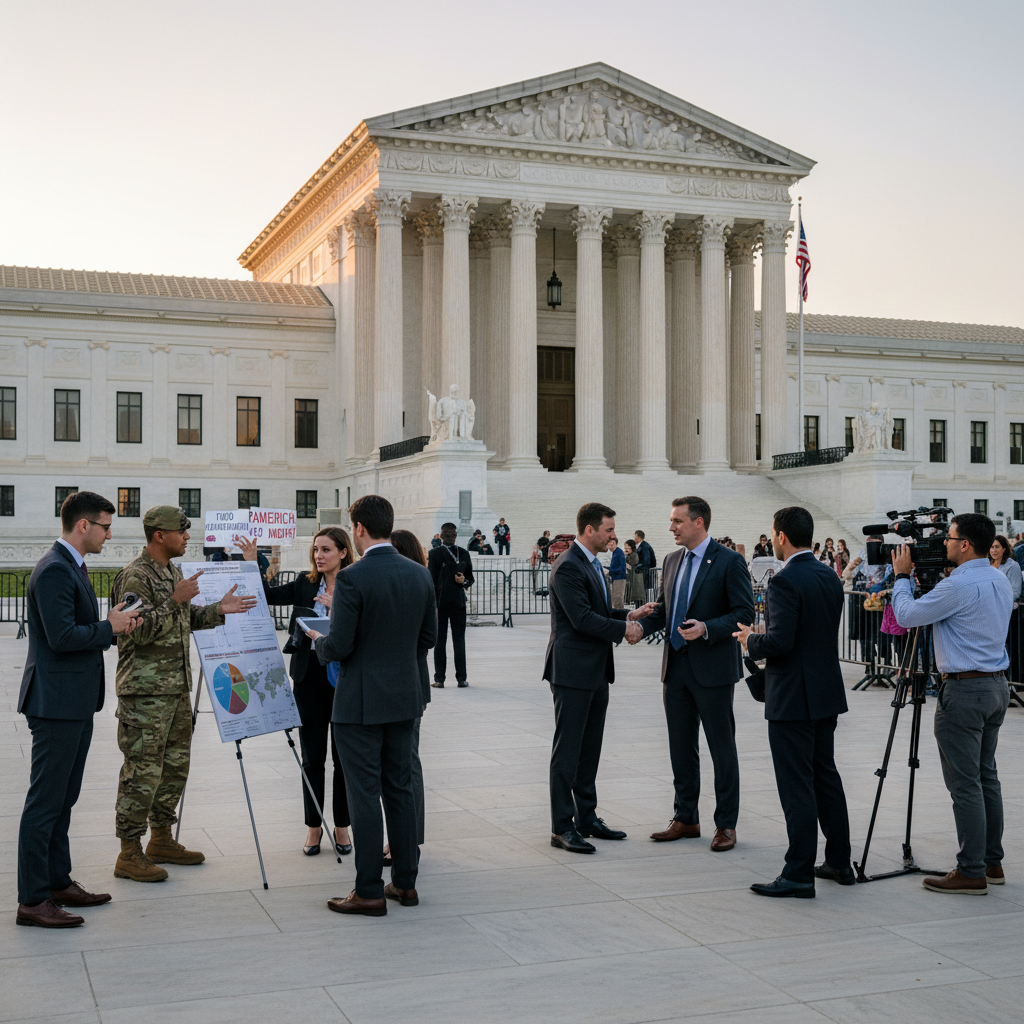
On Tuesday evening, the Justice Department asked the Supreme Court to block the release of billions of dollars in foreign aid, already appropriated by Congress, at President Donald Trump’s request. The filing, an emergency petition to the high court, will return the battle over U.S. Agency for International Development (USAID) funding to the justices for the second time in six months.
The funds in question, which add up to nearly $12 billion in foreign aid, were set to be obligated by the White House to USAID by September 30, the end of the fiscal year. In January, however, President Trump, just back from his Mar-a-Lago holiday, signed an executive order on day one of the new session of Congress blocking almost all foreign aid payments by the federal government. At the time, the president billed the order as a crackdown on “waste, fraud, and abuse” in foreign spending.
The freeze was quickly put on hold by a federal court. In February, U.S. District Judge Amir Ali of Washington, D.C., ruled that the Trump administration could not block funding for projects that Congress had already approved, and he issued an injunction ordering the White House to begin releasing funds to USAID for billions of dollars of approved grants.
In a response filed just last week, the Trump administration asked the U.S. Court of Appeals for the D.C. Circuit to reconsider. This time, however, the appeals court said no, writing in a 2-1 decision earlier this month that Judge Ali’s injunction should be vacated. In her opinion for the majority, Judge Karen L. Henderson, an appointee of George H.W. Bush, wrote that the plaintiffs in the case, a group of foreign aid groups hoping to have their grant payments reinstated, lack a “cause of action,” or a right to sue the administration. Henderson cited the doctrine of impoundment in her majority opinion.
Although the Trump administration claimed victory with the appeals court’s decision, no formal mandate has been issued. Without a mandate, Judge Ali’s decision and the payment schedule included in his original injunction remain in place. The ruling had given the White House until September 30 to distribute the foreign aid funds to the relevant projects. Without a new injunction in place, however, the clock is ticking, and Trump is likely to be forced to make good on his $12 billion promise in just a few short weeks.
On Tuesday, U.S. Solicitor General D. John Sauer filed an emergency petition with the Supreme Court in which he asked the court to step in before the September 30 deadline to allow the government to “rapidly obligate some $12 billion in foreign-aid funds.” In the filing, Sauer makes the case that courts should not be involved in foreign aid decisions, a highly politicized process, but that it should be left up to the political branches of the government.
“Congress did not upset the delicate interbranch balance by allowing for unlimited, unconstrained private suits,” Sauer wrote in the filing. He added that “any lingering dispute about the proper disposition of funds that the President seeks to rescind shortly before they expire should be left to the political branches, not effectively prejudged by the district court.”
The plaintiffs in the lawsuit, a group of foreign aid organizations whose projects depend on the USAID grants, don’t see it that way. They argue that the president simply cannot rescind spending approved by Congress, and they point to the Impoundment Control Act (ICA), a 1970s-era law meant to rein in executive overreach on federal spending, and the Administrative Procedure Act, as the major sources of their ability to claim a “cause of action” in court.
The White House has until Friday to file a response to the emergency petition. In a separate order earlier this year, the Supreme Court declined to block the release of billions of dollars in foreign aid on similar grounds. In a brief 5-4 order, the high court sent the issue back to a lower court for further consideration, and it ultimately ended up before Judge Ali.
The stakes could not be higher. If the government can block the payments, it gives the president an enormous amount of power in foreign aid spending, but if the plaintiffs win, it will limit the executive branch’s power over the budget. The Supreme Court has already weighed in on a very similar case this year. A ruling is expected soon.