- calendar_today August 12, 2025
Virginia industries experience economic uncertainty due to Trump’s trade policies that break supply chains, raise costs, and impact business strategies.
With Trump’s trade policies continuing to redefine international trade, Virginia’s economy is suffering. From the manufacturing belts of Richmond to the agricultural belts of rural Virginia, consumers and businesses alike are acclimating to a new economic reality of higher prices, supply chain disruption, and market uncertainty.
Since the threat of tariffs on vital imports and countermeasures from leading trading partners looms over the state’s top industries, both opportunity and threat wait for them in the complexifying landscape.
Manufacturing Under Supply Chain Pressure
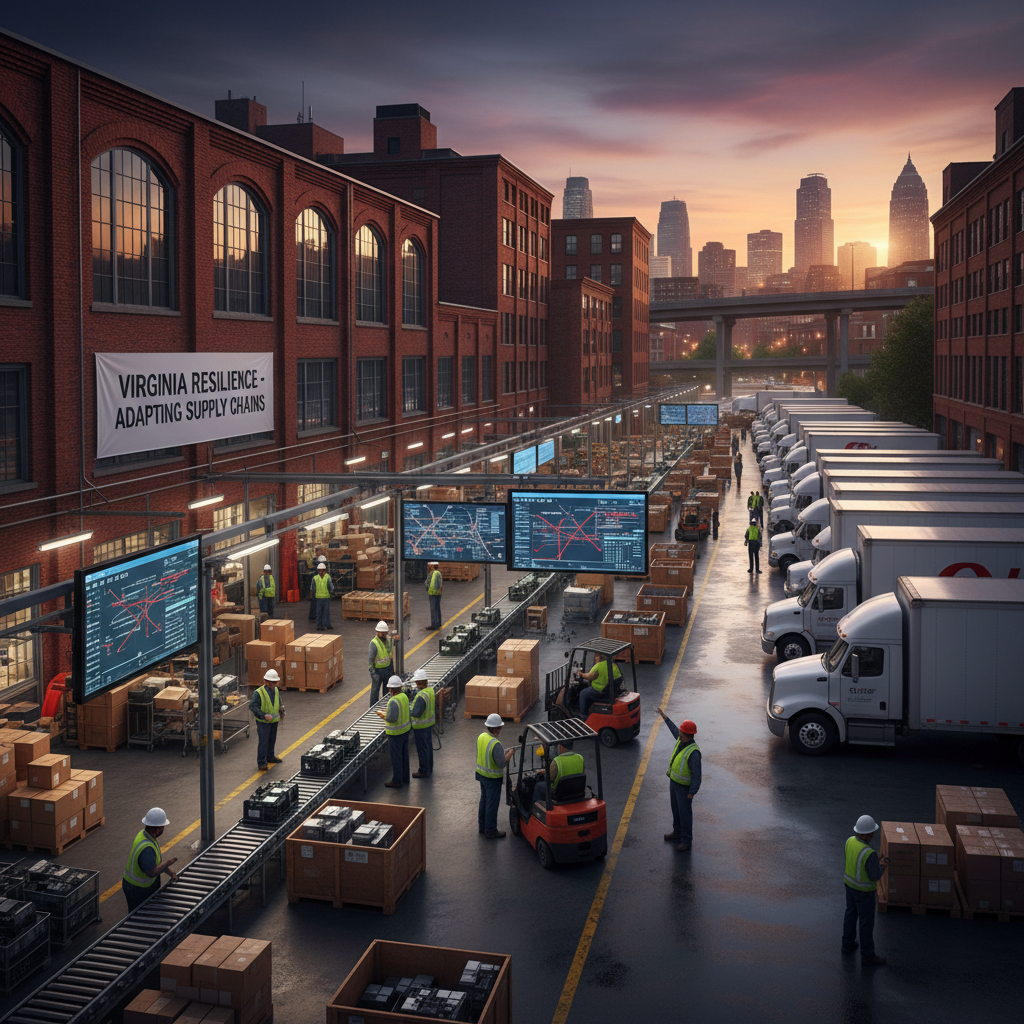
Virginia’s industrial base, an important part of the state’s economic production, is impacted directly by increased input prices as a result of import tariffs on inputs such as steel and aluminum. Urban centers such as Richmond and Norfolk, famous for industrial manufacturing, are feeling increased operating costs as manufacturers struggle with the expense of imported raw materials.
Local producers are now compelled to reconsider supply chains and procurement methods in an attempt to buffer the blow. For the automotive, machinery, and electronics industries, the higher cost of imported components is eroding competitiveness locally and on the global stage.
Agricultural Sector Faces Export Challenges
Virginia’s agricultural sector, a mainstay of the rural economy, is also adapting to the new trade regime. Retaliation tariffs by key partners such as China are affecting exports of soybeans, tobacco, and poultry—cornerstones of Virginia’s agricultural production.
Farmers in Shenandoah Valley and the Tidewater area are feeling the squeeze as foreign demand for these commodities declines. As export markets shrink, farmers are looking at alternate crops or finding new trade corridors to keep their operations afloat.
State and federal leaders are being urged by local agricultural associations to advocate a more balanced trade policy that preserves Virginia farmers without sacrificing global competitiveness.
Small Businesses Struggle to Absorb Costs
Small businesses throughout Virginia, from Virginia Beach to Charlottesville, are also being hit with the costs of increasing prices. Most depend on imported goods—whether construction materials, retail goods, or consumer products—and the tariffs are narrowing already slim profit margins.
Entrepreneurs are becoming more worried about long-term viability, particularly as supply chain issues lead to delivery delays and increased prices for common items. Small business proprietors are looking into domestic alternatives, but these products tend to have greater costs and logistics challenges.
Consumer Expenses and Spending Patterns Change
For consumers, the ripple effects of Trump’s trade policies are increasingly visible. Virginians are seeing increased prices on a variety of products, from electronics to home appliances and cars. As inflationary pressures mount, families across the state are making adjustments to spending and becoming acutely price-sensitive.
In urban centers such as Alexandria and Roanoke, retailers are experiencing slower sales in some areas as consumer confidence declines. This change is causing companies to rethink pricing strategies while maintaining the higher cost of goods.
Political and Business Community Response
Virginia business and political leadership groups differ regarding Trump’s trade policy. There are local government officials who suggest protectionism will help ensure jobs in America by decreasing dependency on international imports. Other sources state that a long-term disaster can ensue as a result of trade tension as Virginia’s economy is largely driven by heavily import-dependent businesses.
The Virginia Chamber of Commerce and other business groups are calling on Washington to embrace more sophisticated trade policies that reconcile national interests with the realities of an interconnected economy. Numerous local stakeholders are calling for targeted relief to industries hardest hit by the tariff actions.
Investors Navigate Economic Uncertainty
With uncertainty surrounding trade, Virginia investors are reassessing their financial planning. Economic experts are recommending a move to domestic markets and industries that are less at risk from global trade uncertainty.
Interest is also building in sectors likely to gain from more domestic production, such as renewable energy and infrastructure. But other investors are guarded, aware of the potential for additional market volatility if trade tensions escalate.
Virginia’s Economic Outlook in the Face of Trade Tensions
In spite of the economic stress, Virginia is economically resilient. Having a diversified economy that covers manufacturing, technology, agriculture, and defense, the state is positioned to respond to the evolving trade environment.
Local policymakers and businesses are seeking innovative solutions to counter risks while lobbying for federal policies that safeguard the state’s economic interests.
As the Trump administration’s trade agenda evolves, Virginia will be at the forefront of the national debate, mediating the tension between the requirement for economic security and the imperative of international interdependence.