- calendar_today August 9, 2025
The intensifying U.S.–China trade conflict in 2025 has cast a long shadow over Virginia’s economy. With its strategic military bases, vital shipping ports, and thriving tech corridor, the Commonwealth is facing multi-dimensional economic pressure as tariffs rise and retaliatory policies take effect.
President Trump’s sweeping tariffs, followed by China’s retaliation, are reshaping trade routes, disrupting supply chains, and placing defense and export-reliant sectors under stress. For Virginia investors, the time to act strategically is now.
How the Trade War Is Impacting Virginia
1. Port of Virginia Faces Trade Volume Drop
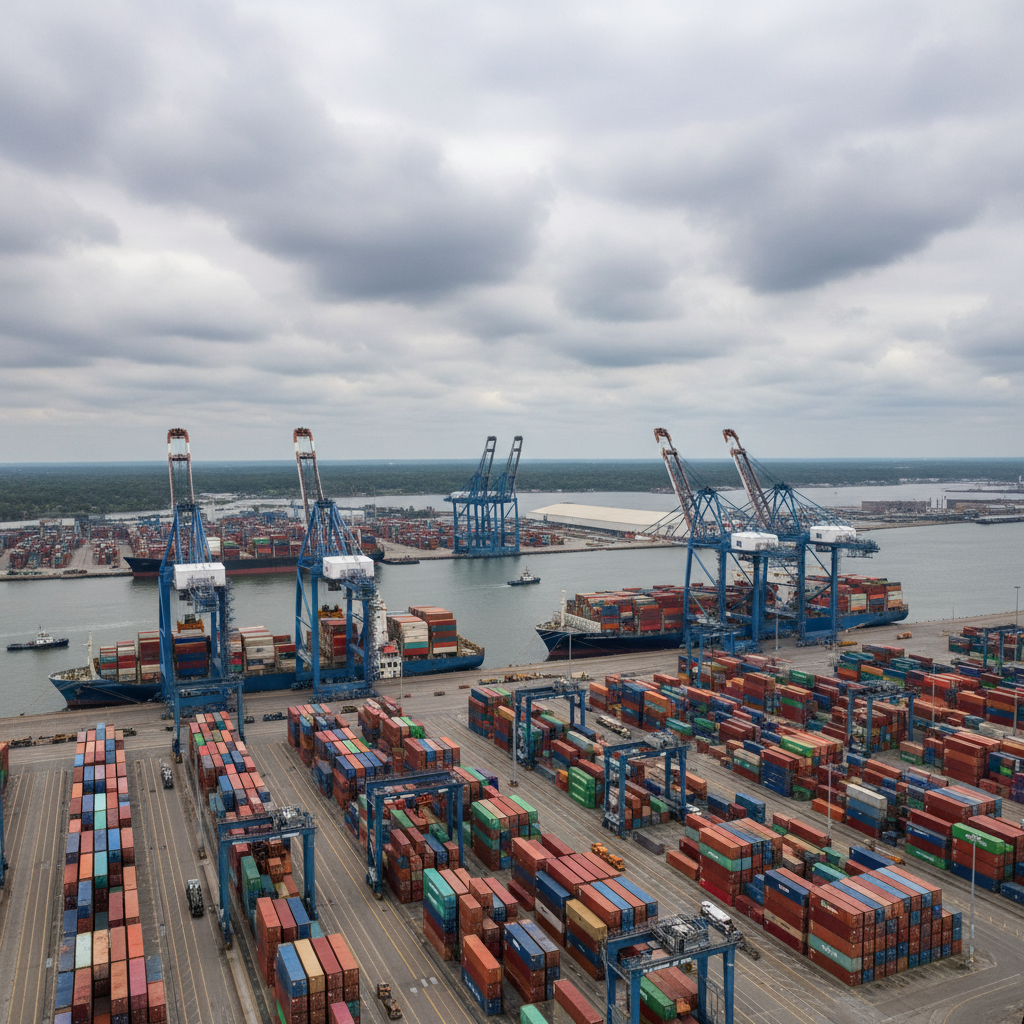
As one of the East Coast’s busiest trade hubs, the Port of Virginia in Norfolk is experiencing a sharp decline in inbound and outbound cargo. Container volumes are down 21% compared to Q1 2024, largely due to China’s new 34% tariffs on U.S. goods.
Export-heavy shipments—especially machinery, wood products, and soybeans—have slowed, straining revenue for local shipping and logistics firms.
2. Defense Sector Caught in the Middle
Home to Pentagon contractors and military infrastructure like Naval Station Norfolk and Quantico, Virginia’s defense industry is being squeezed by China’s new rare earth export restrictions. These minerals are critical for producing advanced weapon systems, aircraft parts, and semiconductors.
Defense tech suppliers in Northern Virginia, including Fairfax and Arlington, are working to secure alternative sources from Australia and Canada—but cost hikes and timeline delays are expected.
3. Tech Corridor Under Strain
Virginia’s rising tech corridor from Arlington to Richmond is feeling the impact of tightened semiconductor and electronics supply. Firms dependent on Chinese components are experiencing higher production costs and longer lead times.
Cybersecurity and software startups remain resilient, but hardware-based ventures are adjusting forecasts for Q3 and Q4 2025.
Virginia’s Adaptation and Strategic Shifts
Virginia’s diverse economy provides it with some insulation, and state leaders are pivoting quickly:
- Port Expansion Diversification:
The Port of Virginia is exploring enhanced trade with India, Vietnam, and Latin America to diversify away from China-dependence. - Defense Realignment:
Pentagon contracts are shifting focus toward domestic R&D and increased stockpiling of critical components from allies, which benefits local suppliers investing in resilience. - Tech Investment Incentives:
State tax incentives are encouraging data centers and AI firms to accelerate U.S.-based chip development and software deployment.
What Virginia Investors Should Do Now
To navigate the storm, financial experts are advising Virginia investors to take calculated steps:
- Look to Regional Infrastructure and Shipping Investments
While global routes may falter, domestic logistics and east coast maritime infrastructure are expected to grow under reshoring initiatives. - Consider Defense-Focused ETFs and Stocks
Companies in Northern Virginia involved in advanced defense tech and logistics are likely to benefit from increased federal contracts. - Explore Tech and Cybersecurity Funds
Software and cybersecurity remain bright spots. Consider funds with heavy exposure to Virginia-based or U.S.-based digital security firms. - Stay Flexible and Informed
Monitor trade developments and state economic forecasts. Quick pivoting will give local investors an edge as markets remain unpredictable.
Virginia’s Strategic Resilience
Virginia stands at a critical intersection of trade, technology, and national security. While U.S.–China tensions will continue to disrupt old patterns, the Commonwealth’s agile response—from diversifying port trade to accelerating domestic defense innovation—positions it well for transformation rather than stagnation.
Local investors who pay attention to these shifts and invest with precision can weather this volatile climate and tap into new growth opportunities in the years ahead.