- calendar_today July 14, 2026
NEW YORK — A record-breaking tyrannosaurus rex fossil originating from South Dakota has commanded $50.13 million at Sotheby’s auction, setting a new benchmark for fossil sales and sparking interest across Virginia’s paleontology and museum community.
Historic Sale Sets New Fossil Auction Record
The fossilized remains, nicknamed Gus, now hold the distinction of being the world’s most expensive fossil. Sotheby’s had estimated the t rex skeleton would fetch between $20 million and $30 million, but intense international interest pushed bidding far beyond expectations. The winning $50.13 million bid, placed by phone, surpasses the previous record held by Apex the Stegosaurus, sold for $44.6 million earlier in 2024.
Unearthing Gus: Provenance and Composition
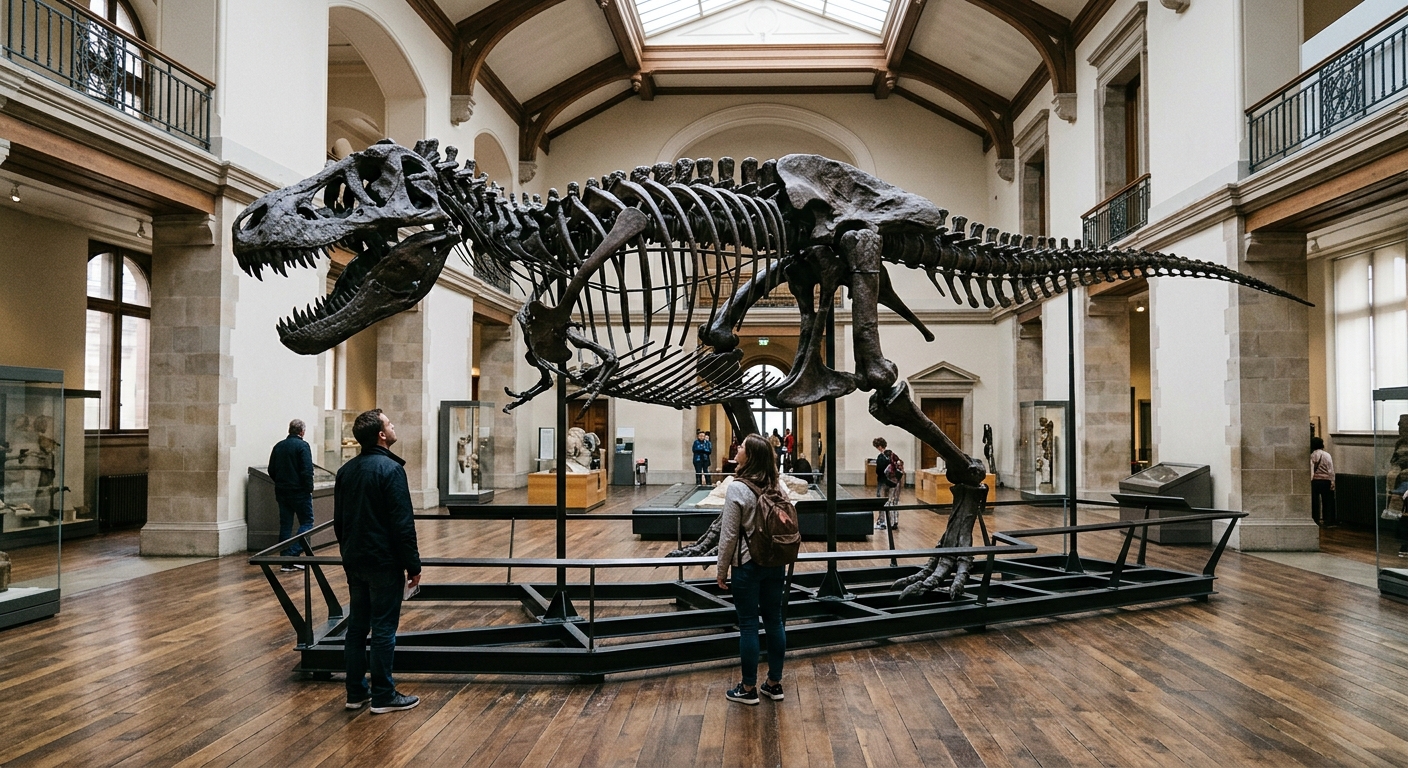
Gus was discovered in the renowned hell creek formation of South Dakota, an area celebrated for producing numerous iconic dinosaur fossils. This south dakota fossil is estimated to be around 67 million years old and measures an impressive 38 feet in length. The skeleton includes 183 fossilized bone elements, making it about 61% complete by bone count and approximately 75-80% intact by mass.
Features and Rarity of the Dinosaur Fossil
This remarkable dinosaur fossil boasts several rare traits not often found in other specimens. Gus includes both feet, a well-preserved wishbone, a complete pelvis, and even displays evidence of healed fractures and bite marks. These features are of particular interest to paleontologists and museums, as they provide insights into the life and struggles of predators from the Cretaceous period.
Comparison with Other Notable Tyrannosaurus Rex Specimens
While significant, Gus is slightly less complete than Stan and Sue—the two complete t rex fossils that have long fascinated researchers. The stan fossil is about 70% intact, while the sue dinosaur specimen is noted for its 90% fossil completeness. Gus, nonetheless, remains one of the most substantial T. rex discoveries to date and joins an elite group of dinosaur remains that have reached international acclaim.
Implications for Science and Private Collectors
The new owner, who has chosen to remain anonymous, receives full rights to Gus, including the authority to license replicas or display the skeleton publicly. While this flexibility offers commercial opportunities, it also raises concerns among scientific communities in Virginia and beyond. Many paleontologists urge that important specimens remain in public institutions, where they can be accessed for ongoing research and future generations, rather than disappearing into private ownership.
Virginia’s Stake in Fossil Discoveries
Museums, educators, and science advocates across Virginia are taking note of Gus’s historic sale, recognizing both the excitement a fossil auction can bring and the risks of losing critical artifacts to private hands. The region’s own paleontological institutions frequently engage with traveling exhibits and research collaborations, and a fossil of Gus’s stature could have significant educational value for local schools and universities.
The Future of Gus and Fossil Preservation
As the paleontology world awaits news on whether Gus will be publicly displayed or remain in a private collection, discussions continue about striking a balance between private investment and public benefit. Whether in Virginia or nationally, fossil discoveries like Gus highlight both the allure and responsibility attached to ancient relics, especially as the debate over fossil completeness and scientific access persists.